
Topi Topics: Off the NRA Floor (Chicago)
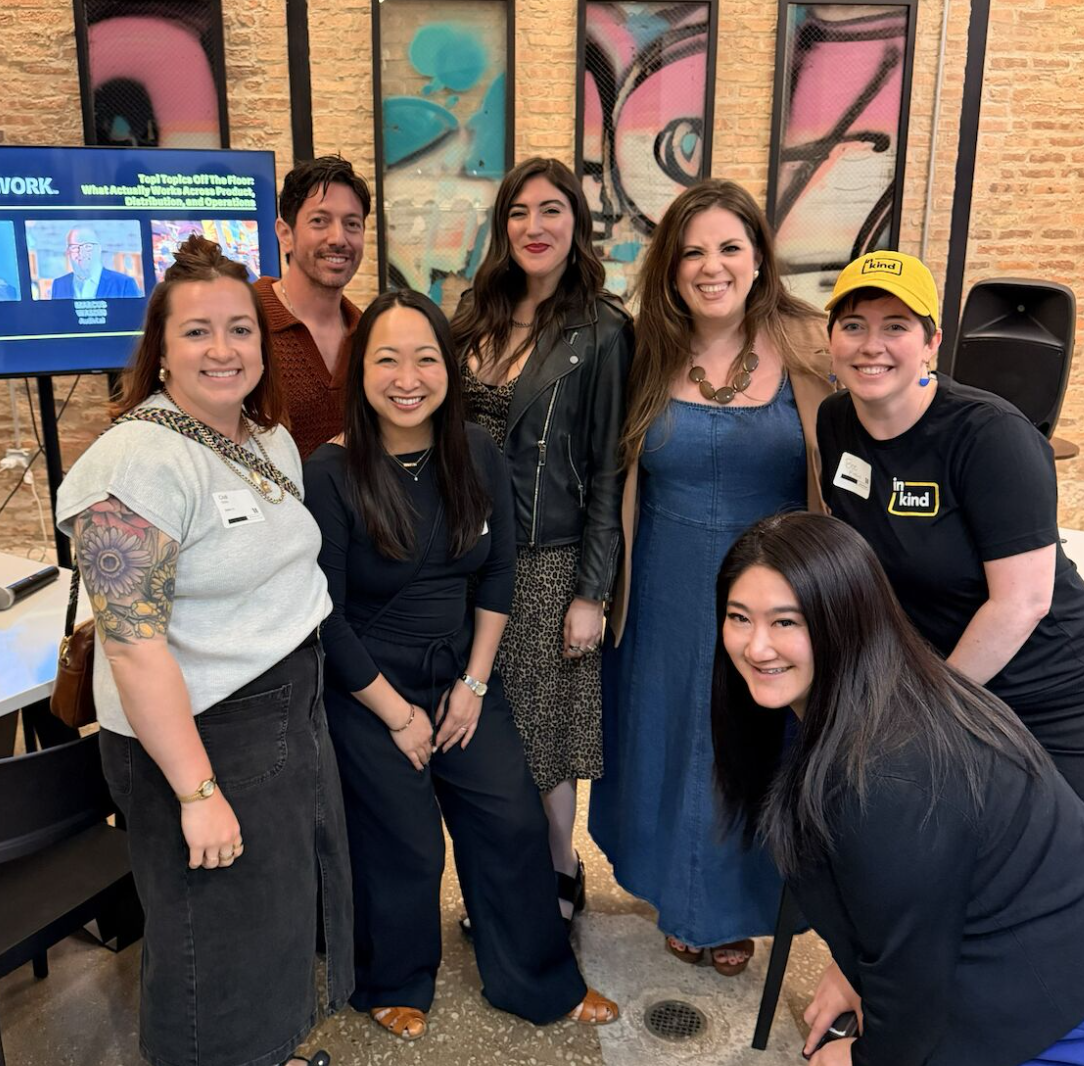
Every Topi Topics conversation comes back to the same idea: the work that holds up under pressure is usually the part operators and founders don't talk about. Chicago made that point three different ways.
The format is intentionally tight. Three speakers, pecha kucha style, twenty slides and twenty seconds each, one clear thesis per person. No wandering panels. No keynote energy. The constraint forces clarity, because there is no room to hide a thin idea behind a long talk.
NRA week is one of the most crowded weeks of the year in this industry, and the room filled anyway.
Distribution Is the Strategy
Liz Einhorn, Experience Threee
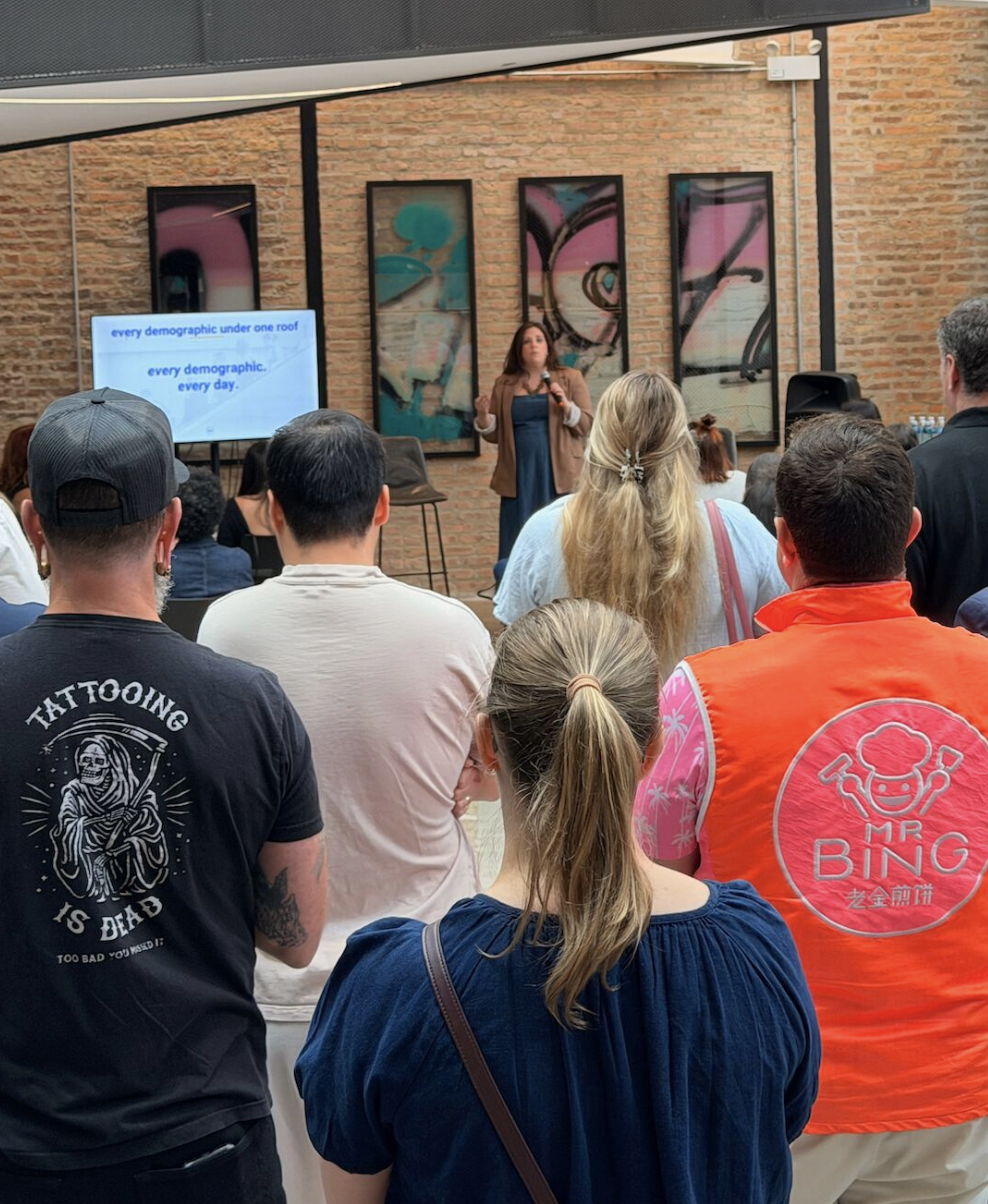
Liz opened by asking the room to guess the number one selling food item in airports. People called out burgers, chips, pretzels. The answer is turkey sandwiches. The laugh got her into the real argument: airports are not a side channel. They are an operational ecosystem, and traveler behavior shifts the moment someone clears security.
Her sharpest line was about the supply chain, not the consumer.
"It is harder to get a tomato through an airport than it is to get a person through TSA."
If you self-distribute, someone physically has to escort your product through security every time a delivery arrives, which pulls labor off your operation. Distribution is not a footnote to the airport strategy. It is the strategy.
She was equally candid about the operational reality of running food at scale inside an airport. She runs Tortazo, Rick Bayless's fast casual concept, with three locations in O'Hare, and her honest read was that consistency comes from controlling what you can: pre-portioned proteins, prepackaged salsas, commissary prep off site.
"There's a reason the Cheesecake Factory is not at the airports."
You cannot run a thirty-page menu back of house with limited equipment and high turnover. The traveler does not know a concessionaire operates Tortazo. They think it is the Tortazo team, so it had better taste like the Tortazo team every time.
Lead With the Collapse
Brian Goldberg, Mr Bing Foods
Brian told the Mr Bing story with the hard parts left in, which is rarer than it should be.
He was a professional athlete, then in finance, then television news, then sauce. He majored in Chinese, fell in love with jianbing on the streets of Beijing, and decided he wanted to bring it back. He opened restaurants in Hong Kong, then New York. He expanded too fast, did not manage the numbers, and the business failed. He was open about how hard that period was. He reopened, did well with pop-ups and campus events, raised capital, and stayed optimistic that he could turn it around. Then Covid took the rest. Not just the restaurants. His savings, his real estate, everything. His food cart sat in a forest because he could not afford a place to park it.
The lifeline was a phone call from Mark Shire at Restaurant Associates, ordering 40,000 jars of chili crisp for frontline pantry boxes during the early weeks of the pandemic, paid for on the spot with a Square dongle Brian had just downloaded. He rented U-Haul trucks, hired his friends, and started making chili crisp as fast as he could. When the order called for a dry version, he called a spice supplier in Brooklyn, and that became a second product line. The foodservice relationships became restaurant partnerships. Today Mr Bing is in more than 10,000 retail and food service locations.
"I want to leave something behind on this earth that makes people happy."
What stayed with the room was that ten thousand locations later, he still tells the hard parts first.
The Gap Was Never Talent
Marcus Wasdin
Marcus has been on both sides of the operator-and-technology table, and he told the story in three acts.
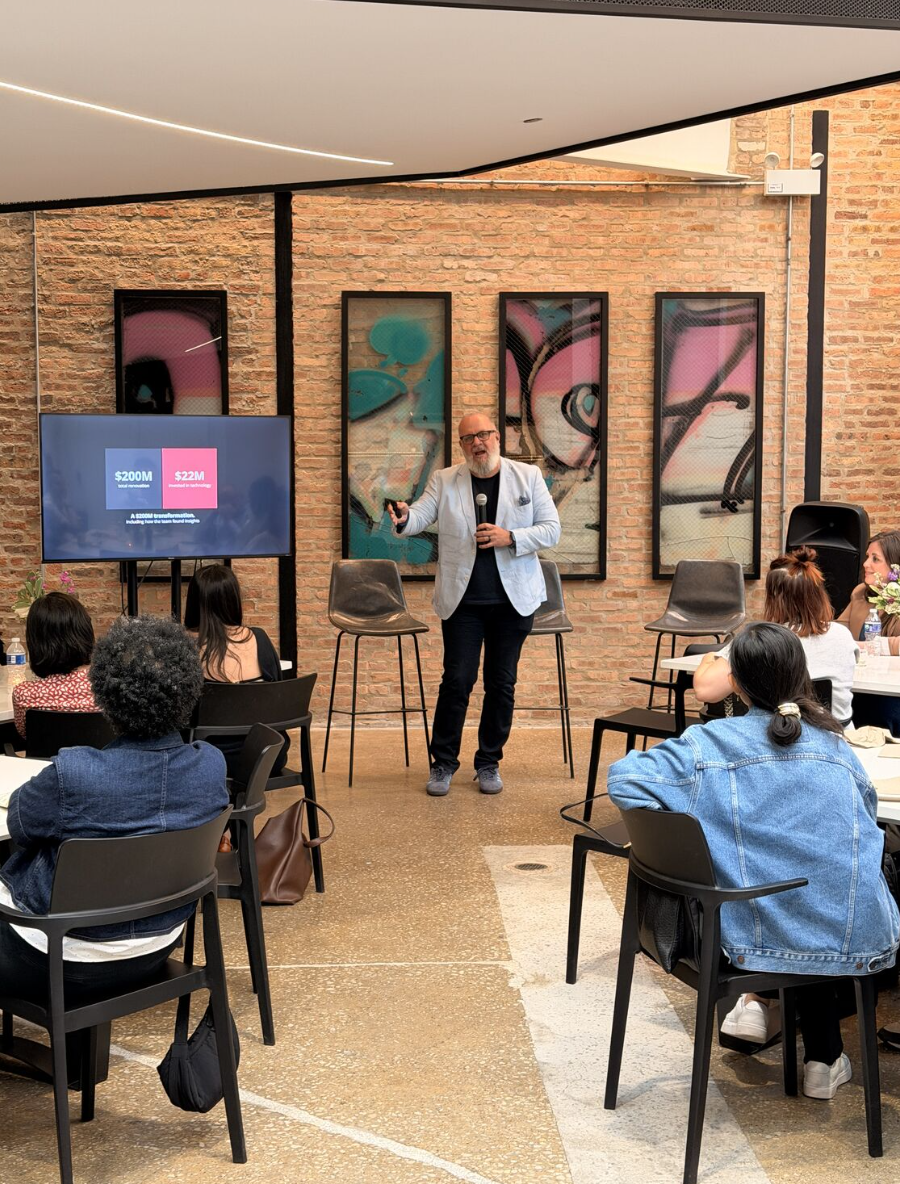
Act one was the Atlanta Hawks. He joined in 2017 as CIO at the start of a new ownership group and a $200 million arena renovation, $22 million of it in technology, all of it ripped out and replaced over eighteen months while the team kept playing basketball. To make the building better, one person on his team spent sixteen hours every week, two of five working days, manually mining Wi-Fi traffic and survey data, turning it into the insights they reviewed in a weekly data-driven meeting where every executive sat and made real operational decisions. Sometimes the decision was as small as moving a trash can. The Hawks went from sixteenth in the NBA to first in overall guest experience. The result was real. The path was tedious, and it worked only because they were willing to pay for the effort.
Act two was Inspire Brands. The same problem, multiplied across 32,000 restaurants. Restaurants are data machines. Every transaction is a signal. But finding the signal is hard, and at that scale only the great operators had the fortitude to do the work.
"The gap between good and great was never talent. It was the willingness to dig."
Act three is PAR, and the question that organizes it is what if everyone could be great. First, ask the data anything in plain language, no SQL. Adoption was slower than he expected, because the people closest to the work are too busy serving customers to stop and ask a question. So the real unlock is the next step: the data finds you. Proactive intelligence that taps the operator on the shoulder before they can act, so a one-store owner runs on the same footing as someone with a hundred.
He was honest about the hard part of that too. An AI product that confidently gives a wrong answer is worse than no product at all. The guardrails matter more than the demo.
The Through Line
Three speakers. Three businesses with almost nothing in common. A CPG and airport hospitality strategist. A sauce founder. A restaurant technology operator. What connected them was not a theme anyone planned in advance.
Every one of them was specific about the unglamorous part. The escorted tomato. The sixteen hours a week nobody wants to spend. The cart sitting in a forest. None of them sold the cleaned-up version, and that is exactly why the room leaned in.
The hard parts are not the obstacle. They are the story.
The work that holds up under pressure is the work most people edit out of the deck. Operators know it. Founders know it. The investors and partners who get the closest to the work know it. Topi Topics exists to put that conversation in a room and let it happen out loud.
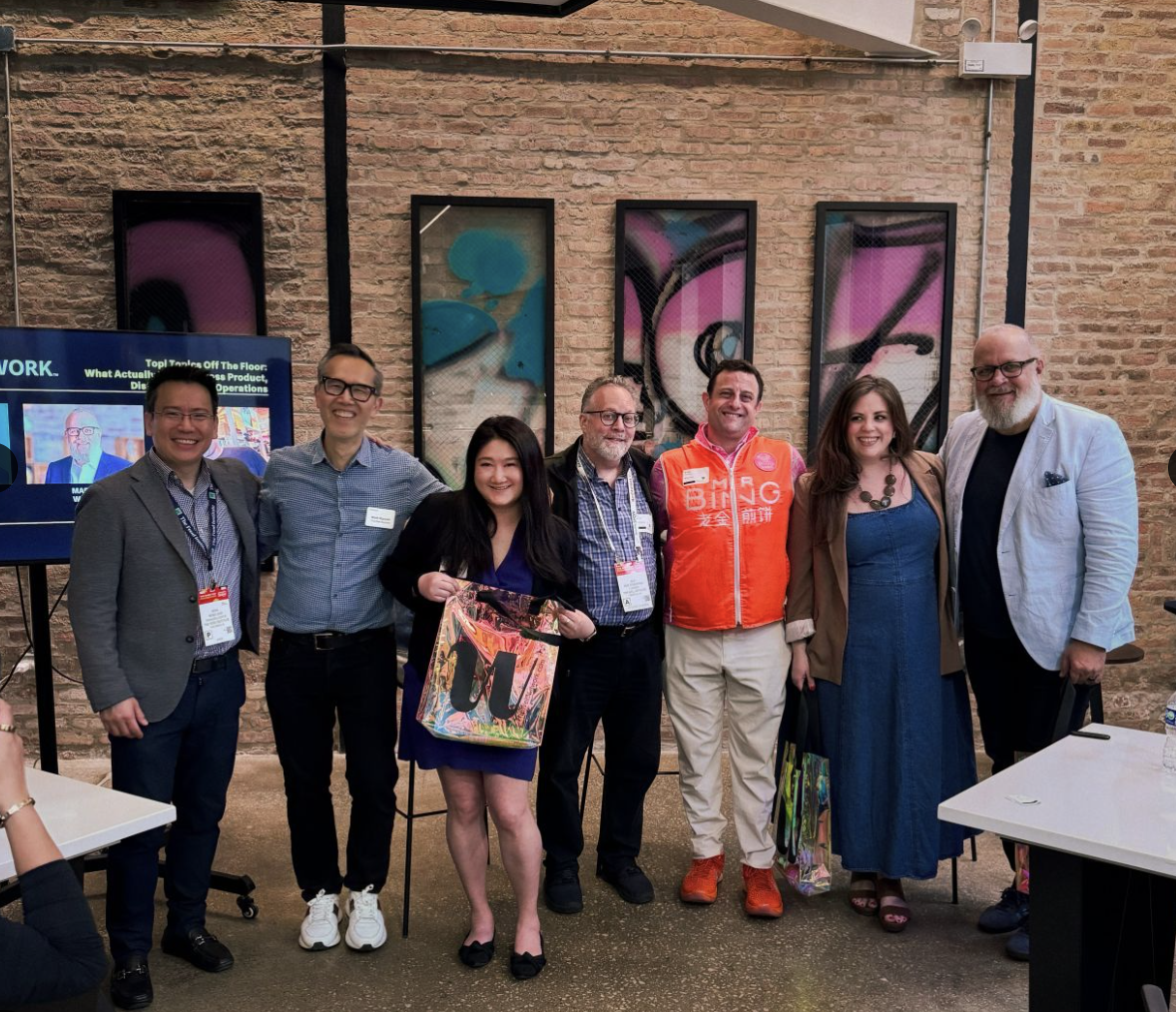
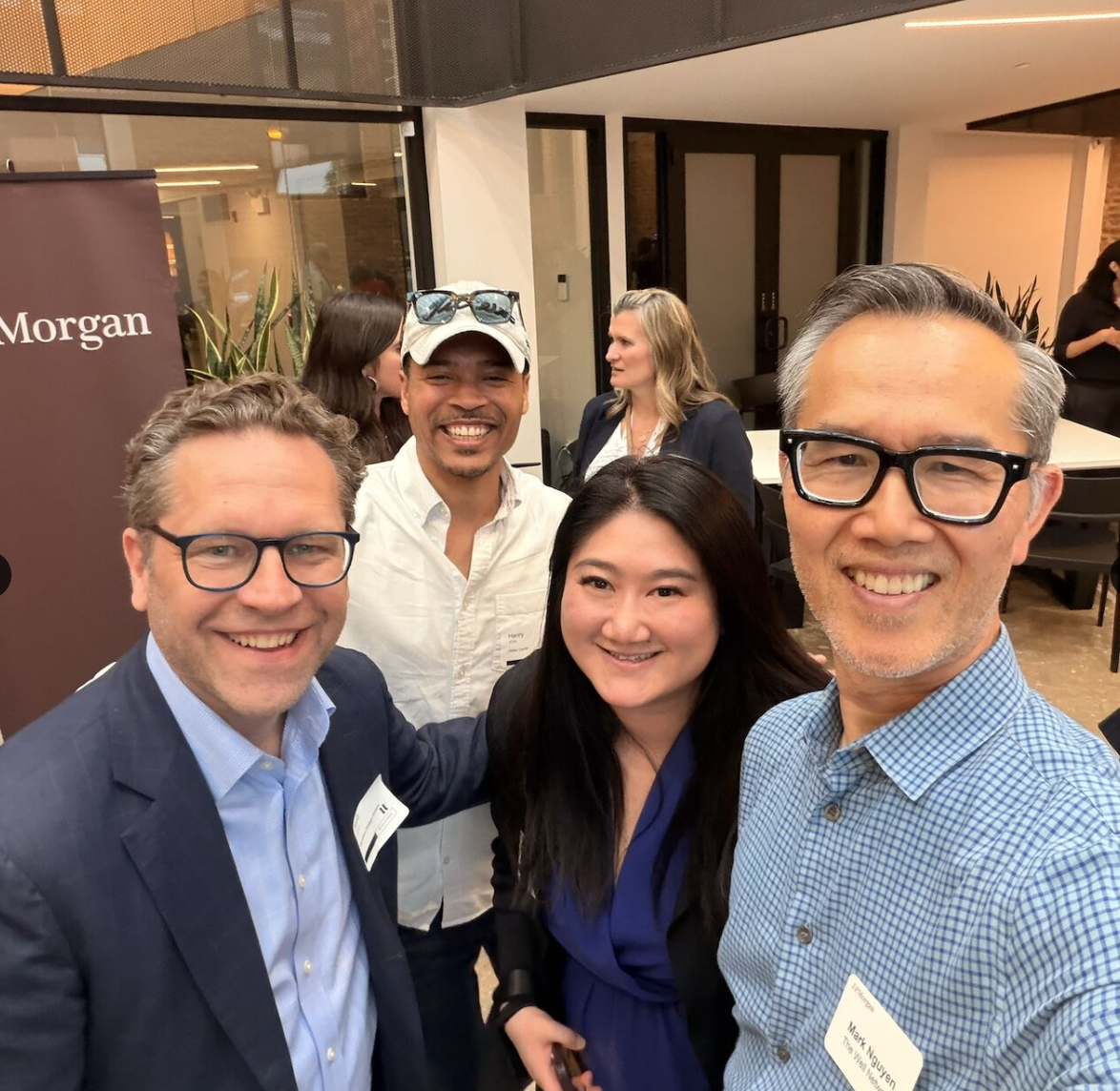
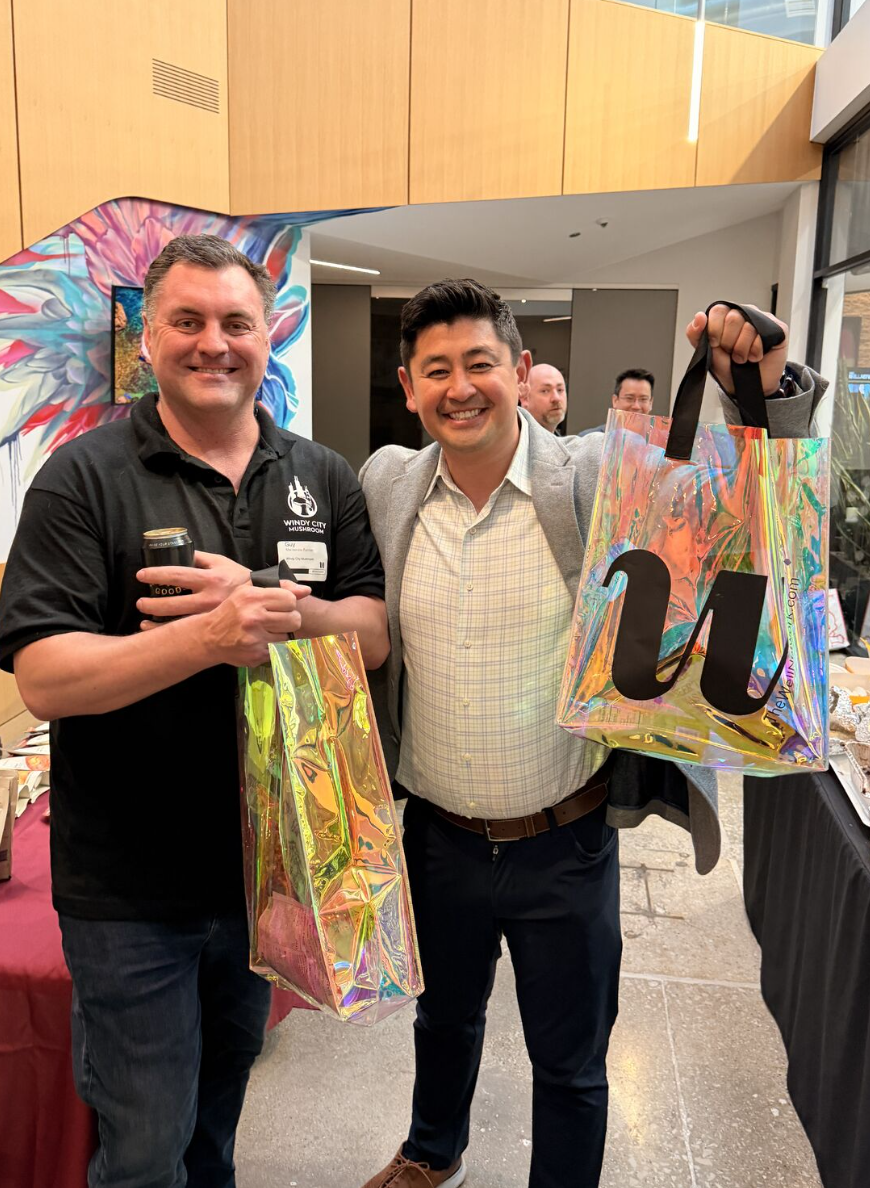
Topi Topics: Off the Floor was co-hosted with The Well Network and The Food Institute, with Naturally Chicago helping bring the audience together and JPMorganChase as the sponsor of the night. Thank you to all of them, and to everyone who chose this room when there was so much else to be at that week.
